In any heat pump vs furnace comparison, the key difference is this: a heat pump moves heat instead of making it, so it delivers two to three units of heat for every unit of electricity. A furnace burns fuel and, at best, turns about 97% of it into heat. Which one is cheaper to run comes down to one thing: the price of your fuel compared with the price of your electricity.
The short answer
- Heat pump vs propane, oil or electric furnace: the heat pump is almost always cheaper to run, often by 30–60%.
- Heat pump vs natural gas furnace: it depends on local prices and climate. In much of the country they are close; in areas with cheap gas and expensive electricity the furnace wins.
The break-even formula
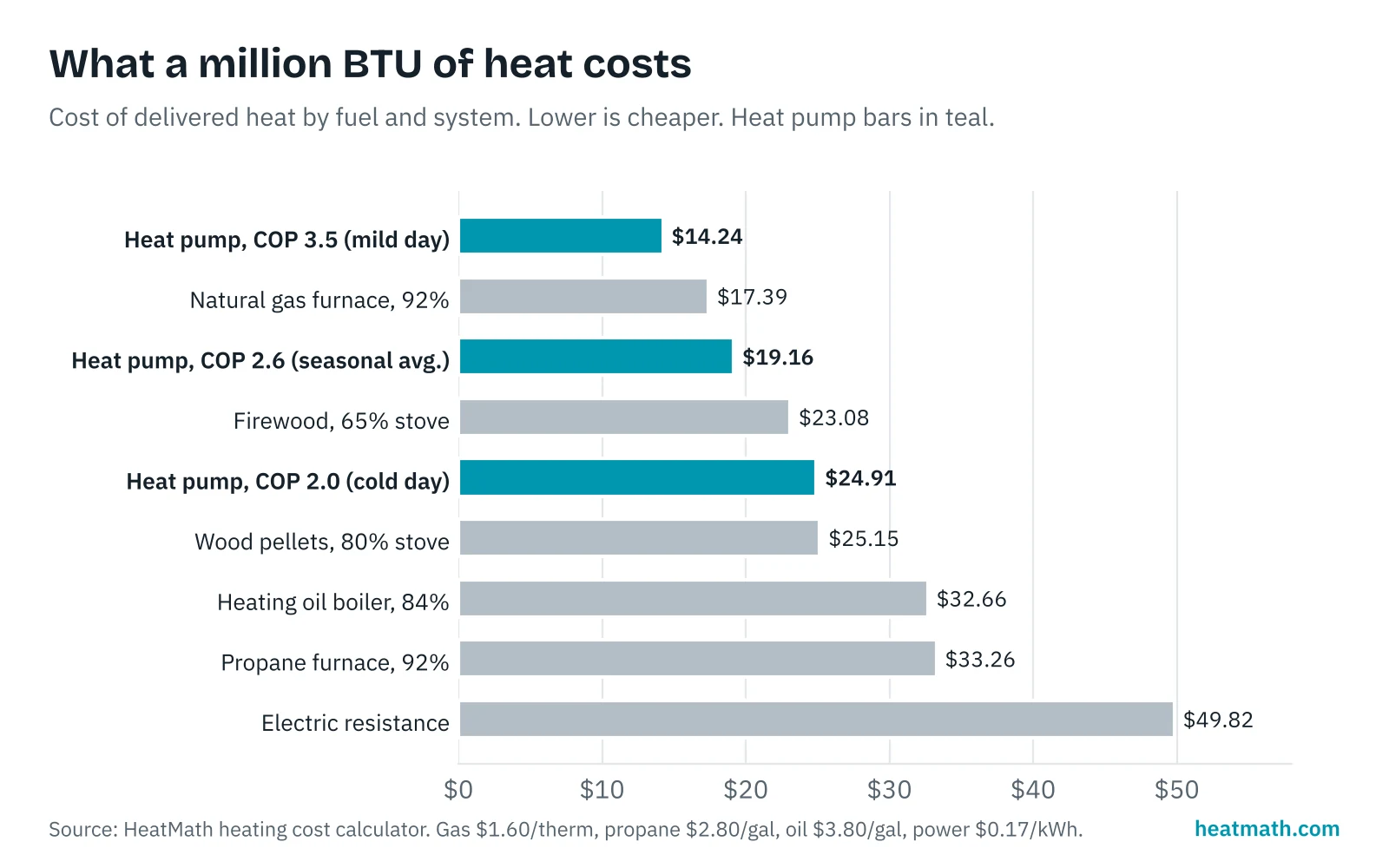
Compare the cost of one million BTU of heat from each:
Gas furnace: gas price per therm ÷ (0.1 × AFUE)
Heat pump: electricity price per kWh ÷ (0.003412 × COP)
Setting the two equal gives a simple test. With a 95% furnace and a heat pump averaging a seasonal COP of 2.6, the heat pump is cheaper whenever:
gas price per therm ÷ electricity price per kWh > 10.7
For example, gas at $1.60 per therm and electricity at $0.17 gives a ratio of 9.4, so the gas furnace is slightly cheaper to run. With electricity at $0.13 the ratio is 12.3 and the heat pump wins. A more efficient cold-climate heat pump with a seasonal COP of 3 lowers the break-even ratio to about 9.3.
How heat pump efficiency moves the break-even ratio
The rule of thumb says a heat pump wins when your price ratio (¢ per kWh ÷ $ per therm) is below about 10. That cutoff assumes a typical seasonal COP and a modern high-efficiency furnace. Change either one and the cutoff moves. The math is simple:
Break-even ratio ≈ seasonal COP × 3.41 ÷ furnace AFUE
If your ratio is below the number in the table, the heat pump is cheaper to run. If it is above, gas is cheaper.
| Heat pump seasonal COP | vs 95% AFUE furnace | vs 80% AFUE furnace |
|---|---|---|
| 1.0 (electric strip heat) | 3.6 | 4.3 |
| 2.0 | 7.2 | 8.5 |
| 2.5 | 9.0 | 10.7 |
| 3.0 | 10.8 | 12.8 |
| 3.5 | 12.6 | 14.9 |
Two things stand out. First, an old 80% furnace raises the bar, so a heat pump beats it at higher electric prices than it could against a new condensing furnace. Second, backup strip heat almost never beats gas. Every hour the heat pump leans on its strips pulls your real seasonal COP down.
Turning HSPF2 into a seasonal COP
Divide the HSPF2 rating by about 2.9 to get a rough seasonal COP. A minimum-efficiency 7.5 HSPF2 unit works out to about 2.6. A 9 HSPF2 unit is about 3.1. Those figures assume a moderate climate. In colder regions, real seasonal COP runs lower, which is why cold climate heat pumps matter there.
Running cost example
A 2,000 sq ft home in a cool climate that needs 60 million BTU of heat a winter:
| System | Assumed price | Cost per winter |
|---|---|---|
| Gas furnace, 95% | $1.60 / therm | about $1,010 |
| Heat pump, COP 2.6 | $0.17 / kWh | about $1,150 |
| Propane furnace, 92% | $2.80 / gallon | about $2,000 |
| Oil furnace, 84% | $3.80 / gallon | about $1,960 |
| Electric furnace | $0.17 / kWh | about $2,990 |
Put in your own prices with the heating cost calculator.
Upfront cost, lifespan and maintenance
Running cost is only half the decision. A heat pump heats and cools, so the fair comparison is often a heat pump against a furnace plus a central air conditioner.
| Gas furnace | Furnace + central AC | Ducted heat pump | |
|---|---|---|---|
| Typical installed cost | $4,000–$10,000 | $9,000–$17,000 | $6,000–$18,000 |
| Expected lifespan | 15–20+ years | 15–20 years (AC often less) | 15–20 years |
| Routine maintenance | Once a year | About $200 a year for both | About $150 a year, twice-yearly visits |
| Federal tax credit in 2026 | None | None | None |
If your air conditioner still has years left, replacing only the furnace is usually the cheaper move today. If both are old, one heat pump can replace two systems and close much of the price gap. The federal 25C credit ended for equipment placed in service after December 31, 2025, but some utilities still pay rebates. See our heat pump installation cost and furnace replacement cost guides for detailed quotes.
Heat pump vs furnace: pros and cons
| Heat pump | Gas furnace | |
|---|---|---|
| Also cools the home | Yes | No, needs a separate AC |
| Installed cost | $10,000 – $25,000 | $3,800 – $10,000 |
| Lifespan | 12–15 years | 15–20 years |
| Air temperature at the vents | 90–100°F, steady | 120–140°F, in bursts |
| Performance in extreme cold | Drops; may need backup heat | Unaffected |
| Combustion and carbon monoxide risk | None | Needs venting and CO alarms |
Dual fuel: keeping both
If you already have a good gas furnace, a dual-fuel system adds a heat pump in place of the air conditioner. The heat pump heats the house in mild weather, when it is most efficient, and the furnace takes over below a set outdoor temperature (the “balance point”), often 25 to 35°F. It is a popular choice in cold states where gas is cheap.
Which should you choose?
- Your AC is also old, or you heat with propane, oil or electricity: heat pump.
- Cheap gas, expensive electricity, very cold winters and a good AC: furnace, or dual fuel when the AC dies.
- Somewhere in between: run the heat pump savings calculator with your numbers.
Mistakes that skew a heat pump vs furnace comparison
- Using the wrong gas price. Divide your winter gas bill’s usage charges by the therms used. Summer bills spread fixed fees over very little gas, so the per-therm price looks far higher than what you pay for heat. The EIA’s monthly gas data shows how much residential prices swing by season.
- Counting fixed fees you still pay. The monthly gas customer charge only goes away if you drop gas completely, including the water heater, stove and dryer.
- Using the rated COP. Ratings at 47°F are much higher than what the unit averages over a real winter. Use a seasonal figure.
- Undersizing the heat pump. A small unit hands more of the load to strip heat in cold snaps, and strip heat is the most expensive way to heat with electricity.
- Ignoring the cooling side. A new heat pump is usually more efficient than an old AC, so summer savings count too.
Handy gear for this job
As an Amazon Associate, HeatMath earns from qualifying purchases. These links open Amazon search results, so you can compare brands and prices yourself.
Frequently asked questions
Is it cheaper to heat with a heat pump or a gas furnace?
It depends on your local prices. Divide your electric rate in cents per kWh by your gas price in dollars per therm. If the result is below about 10, a typical heat pump costs less to run than a high-efficiency gas furnace. Above that, gas usually wins. Cheap electricity and pricey gas favor the heat pump.
At what temperature is a gas furnace cheaper than a heat pump?
There is no single temperature. It depends on your prices and your heat pump. Multiply your price ratio by the furnace AFUE and divide by 3.41. That gives the COP the heat pump needs to match gas. When cold weather drops the heat pump’s COP below that number, the furnace is cheaper. A dual fuel system can switch over automatically at that point.
Can a heat pump completely replace a gas furnace?
In most of the US, yes. A properly sized heat pump with backup heat can carry a home through winter. In very cold regions, choose a cold-climate model rated for low temperatures. Some owners keep the furnace as backup for the coldest days instead. Check your electrical panel capacity before you remove the furnace.
Do heat pumps last as long as furnaces?
Not quite, on average. A gas furnace often lasts 15–20 years or more because it only runs in winter. A heat pump typically lasts about 15 years, sometimes up to 20, because it runs year-round for both heating and cooling. Regular maintenance helps both systems reach the top of their range.
Related: heat pump installation cost, furnace replacement cost.