Typical ductwork replacement cost in 2026 is about $3,000 to $10,000 for a whole house, or roughly $16 to $19 per linear foot installed for standard flex and sheet metal runs. A small, easy job can come in under $2,000. A large two-story home with ducts behind finished walls can pass $15,000. Length, material, and access drive almost all of the difference.
Here is how the price breaks down, which material makes sense, and how to tell whether you need new ducts at all or just sealing and repair.
Ductwork replacement cost by length
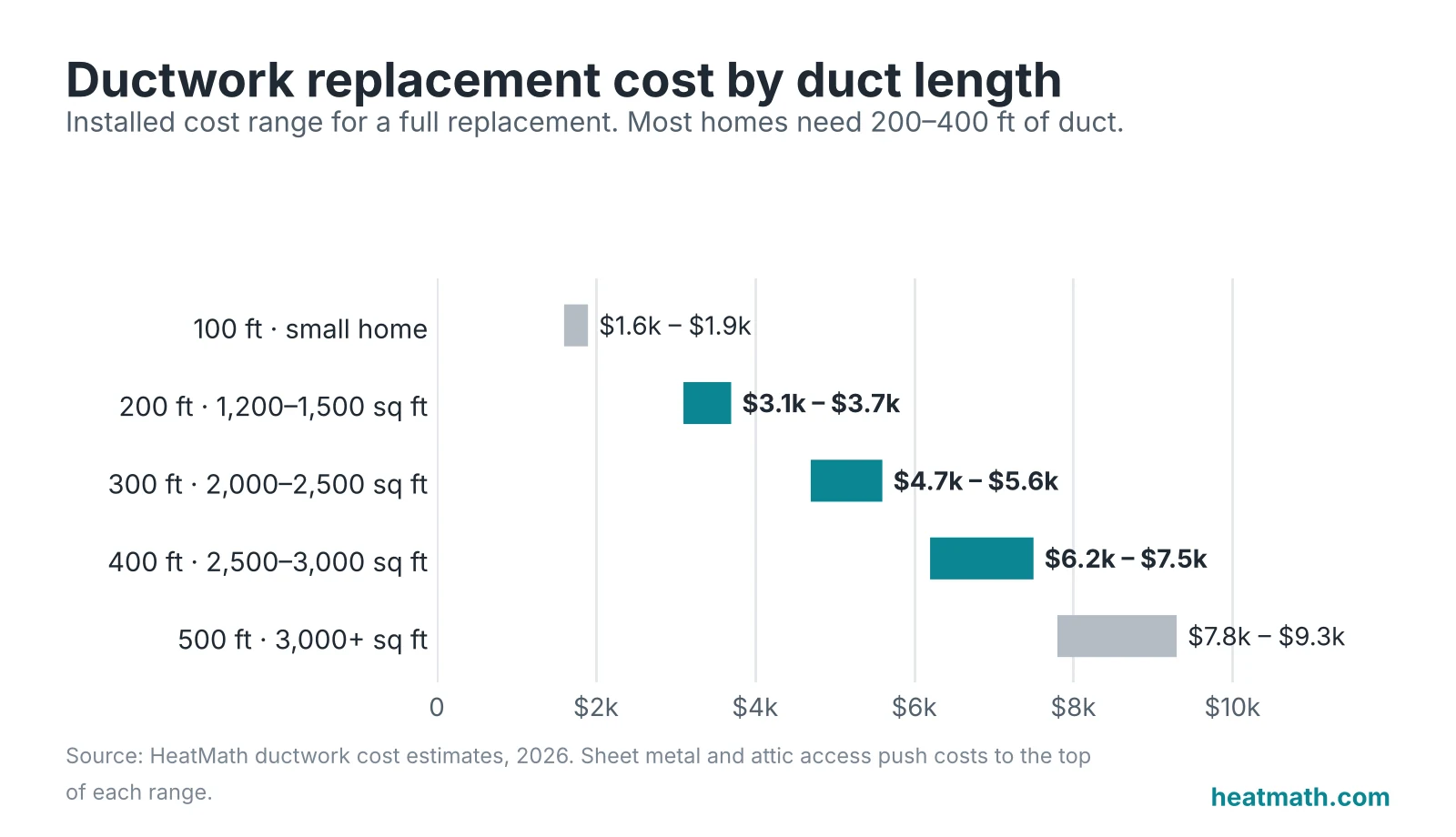
Contractors usually price duct jobs by the linear foot of duct, plus fittings, registers, and labor. This Old House puts typical installed pricing at $16 to $19 per linear foot. The table shows what that means for common job sizes.
| Total duct length | Typical home | Estimated installed cost |
|---|---|---|
| 100 ft | Small home or one zone | $1,600 – $1,900 |
| 200 ft | About 1,200–1,500 sq ft | $3,100 – $3,700 |
| 300 ft | About 2,000–2,500 sq ft | $4,700 – $5,600 |
| 400 ft | About 2,500–3,000 sq ft | $6,200 – $7,500 |
| 500 ft | 3,000+ sq ft or two systems | $7,800 – $9,300 |
Cost ranges from This Old House. Square-footage matches are rough guides and vary with layout.
Other guides run higher. Fixr reports a national range of about $1,850 to $17,150 to replace existing ductwork, with an average near $9,300 for a 2,500 sq ft home. The gap comes from what is included. Higher figures assume galvanized sheet metal trunks, removal of old ducts, and tight crawl spaces or finished ceilings. Treat $16 to $19 per foot as the floor for an easy attic or basement job, not the ceiling.
Cost by duct material
Material changes both ductwork replacement cost and lifespan. Most homes use a mix: sheet metal for the main trunk and flexible duct for the short runs to each room.
| Material Material | l only (per ft) | Typical lifespan Notes | s |
|---|---|---|---|
| Flexible, uninsulated | $1 – $3 | 10 – 20 years | Only for conditioned spaces |
| Flexible, insulated | $2 – $4 | 10 – 20 years | Common for attic branch runs; must be pulled tight |
| Fiberglass duct board | $4 – $7 | 10 – 15 years | Quieter, but harder to clean |
| Sheet metal (galvanized or aluminum) | $7 – $15 | 20+ years | Best airflow and durability; most labor |
Material prices from This Old House. Installed sheet metal often runs $20 per foot or more once fabrication and labor are added, according to Fixr.
What else adds to the bill
- Access. Open attics and unfinished basements are cheapest. Crawl spaces, cathedral ceilings and ducts inside finished walls add hours and sometimes drywall repair.
- Labor. HVAC installers typically charge about $83 to $151 per hour, according to Fixr. A simple replacement takes one to two days. Complex jobs can take four days or more.
- Removal and disposal. Many quotes include it. Ask, because some add a separate fee.
- Hazardous materials. Old ducts wrapped in asbestos tape or insulation need abatement, which can add $2,000 or more. Mold remediation is in the same range.
- Permits. From under $100 to a few hundred dollars, depending on your city.
- Design changes. Adding returns, resizing trunks, or adding a zone costs more than a like-for-like swap, but it often fixes the comfort problems that started the project.
Signs you need new ducts
Ducts do not fail all at once. Look for a pattern of these signs before you pay full ductwork replacement cost:
- The ducts are 15 to 25 years old, or flex duct is crushed, sagging, or torn.
- Some rooms are always too hot or too cold, even after the system was serviced.
- Rust, holes, or disconnected joints you can see in the attic or crawl space.
- Heavy dust indoors, or a musty smell when the system starts.
- High energy bills compared with similar homes, with no equipment problem found.
Leaky ducts are a real cost. This Old House notes that duct leakage can account for 20% or more of a home’s heating and cooling energy loss, and uninsulated ducts in unconditioned spaces can lose 10% to 15% more.
Repair, seal, or replace?
Full replacement is not always the answer, and skipping it avoids the full ductwork replacement cost. A duct leakage test (often called a duct blaster test) tells you how much air the system loses and where.
| Situation Best | t move |
|---|---|
| Ducts under 10 years old with a few leaky joints | Seal joints with mastic or foil tape |
| Sound ducts in a hot attic with thin insulation | Seal, then add insulation wrap |
| One crushed or torn run | Replace that run only |
| Widespread rust, crushed flex, poor layout | Full replacement |
| New heat pump with much higher airflow needs | Resize trunks and returns |
Timing tip: If your furnace, AC, or heat pump is due for replacement, do the ducts at the same time. Installers can size the new equipment and the ducts together, and you avoid paying for two separate jobs. Equipment sizing starts with a load calculation; our guide on what size AC unit you need explains the basics.
Ducts and heat pumps
Heat pumps push more air at lower temperatures than furnaces. Ducts that worked fine with a gas furnace can be too small for a heat pump, which causes noise, weak airflow, and higher bills. If you are switching to a heat pump, ask the installer to check static pressure and duct sizes before quoting. In some homes, a ductless system is cheaper than rebuilding ducts. Compare prices in our mini split installation cost guide.
To see what leaky ducts cost you each year, estimate your heating bill with the heating cost calculator, then apply a 20% loss. That gives you a rough ceiling on what sealing or new ducts could save.
How to get a fair quote
- Get at least three written bids based on an in-home visit, not a phone estimate.
- Ask each contractor to include a Manual D duct design, or at least explain how they sized trunks and returns.
- Confirm what is included: removal, registers, insulation, sealing, permits, and cleanup.
- Ask for a post-install duct leakage test. A good installer will welcome it.
- Check whether your utility offers rebates for duct sealing or insulation. The federal 25C credit for insulation and air sealing ended on December 31, 2025.
Supplies for small duct fixes
As an Amazon Associate, HeatMath earns from qualifying purchases. These links open Amazon search results, so you can compare brands and prices yourself.
Frequently asked questions
How long does ductwork last?
Flexible duct usually lasts 10 to 20 years and duct board 10 to 15 years. Sheet metal can last 20 years or more if it stays dry. Ducts in hot attics or damp crawl spaces wear out sooner.
Can I replace ductwork myself?
You can seal joints with mastic or foil tape and replace a short flex run in an open attic. Whole-house replacement needs proper sizing, sealing, and often a permit, so most homeowners hire a licensed HVAC contractor.
Is replacing ductwork worth it?
It usually is when ducts are old, badly leaking, or poorly designed, and especially when you are replacing the HVAC equipment anyway. If the ducts are sound, sealing and insulating them often gets most of the benefit for a fraction of the cost.